
Ninna-ji at a glance
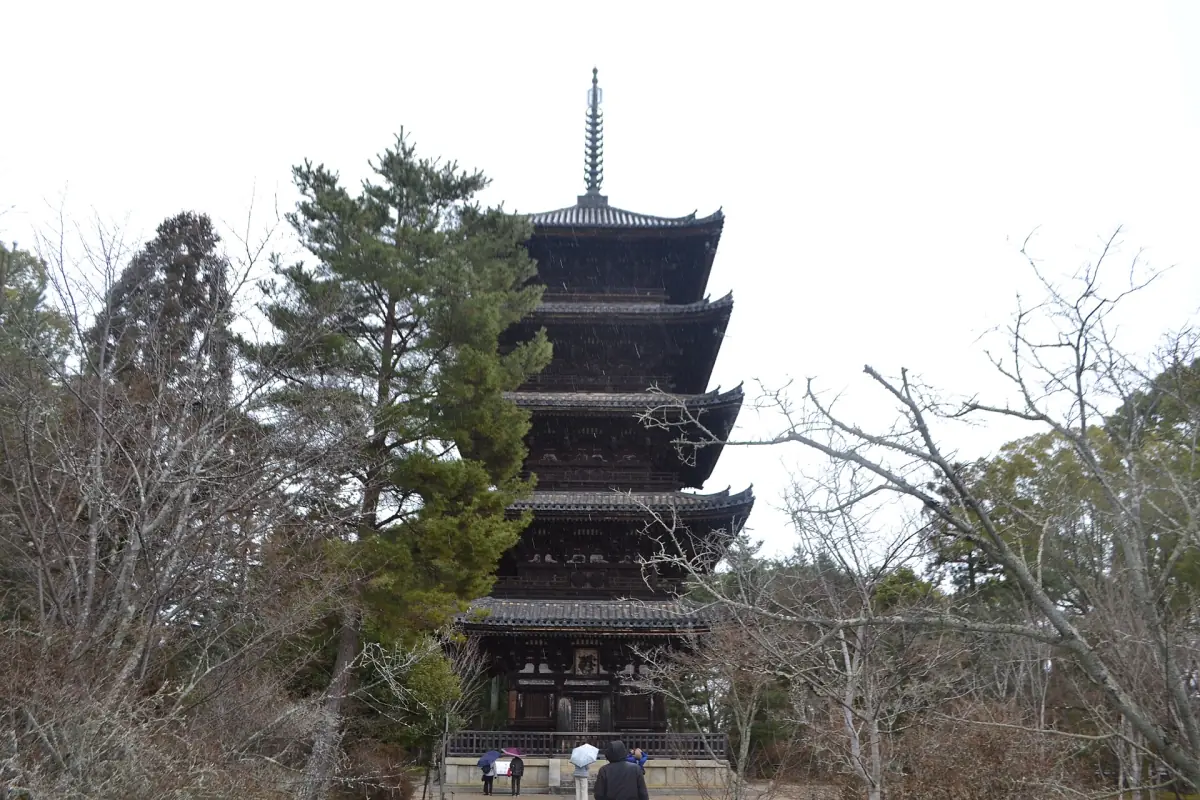
Ninna-ji was founded in 888 and is the head temple of the Omuro school of Shingon Buddhism. It stands at the western end of the Kinukake-no-michi, the road that links Kinkaku-ji, Ryoan-ji and Ninna-ji in northwest Kyoto. The main sights are the five-storey pagoda, the garden of the Goten (also called the Gosho garden) and, in spring, the Omuro cherries, a late-blooming variety.
Outside the cherry season you can walk into the main grounds free of charge. The garden, the treasure house and the tea house each have their own fee. That makes Ninna-ji an easy addition to a Kinkaku-ji morning: you decide on the spot how much of it you want to see.
Ninna-ji entry fees in 2026
The temple charges separately for each area, so the price of your visit depends on what you go into. Pupils up to and including high school enter the garden and the cherry grove free.
| Area | Adults | Groups of 15 or more | School pupils |
|---|---|---|---|
| Main grounds outside cherry season | Free | Free | Free |
| Goten (Gosho) garden | ¥800 | ¥720 | Free up to high school |
| Reihokan treasure house (seasonal) | ¥500 | ¥450 | – |
| Omuro cherry viewing (in bloom) | ¥800 | ¥720 | Free up to high school |
The cherry fee does not include the garden or the treasure house. With a Japanese disability certificate, only the holder enters the garden free. For most visitors the Goten garden is the ticket most visitors choose, because it gives a view across the garden to the pagoda. If you would rather have someone explain the temples along the way, one guided Kinkaku-ji tour includes Ninna-ji as a second stop.
Omuro cherry blossoms
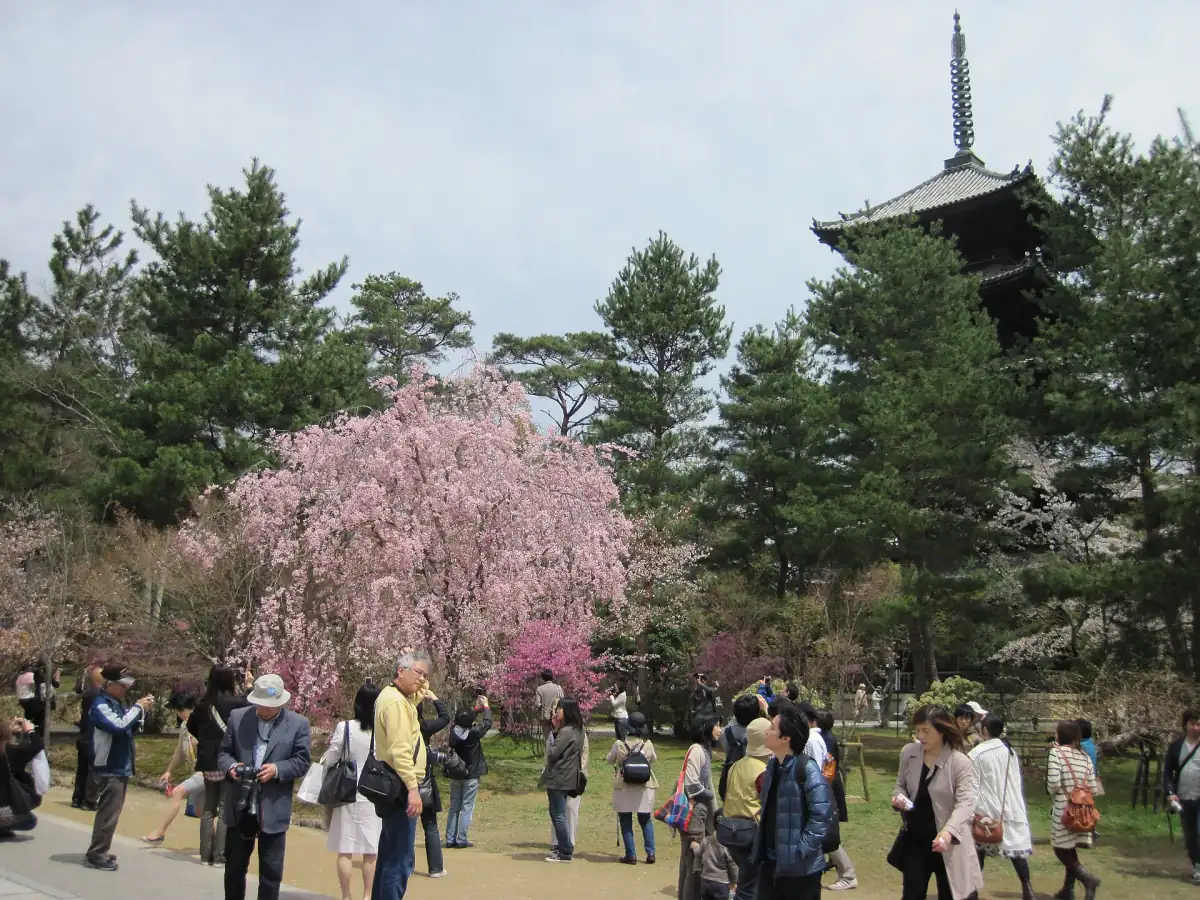
The Omuro cherries are the reason Ninna-ji fills up in spring. They bloom late in the season. The bloom depends heavily on the weather, and the flowering dates change each year rather than falling in a fixed week.
The cherry grove is opened to the public around mid-April, while the trees are in bloom, and is largely closed for the rest of the year. Do not plan on full blossom for the whole of April. Watch the temple's flowering updates in the days before you travel and keep a flexible slot in your plans.
During the cherry season the opening hours change. Plan for 8:00 to 17:00 or 8:30 to 17:30, with admission until 17:00. Check the current hours before you go, especially if you want to arrive at opening time. For the wider picture of cherry season in the city, see the guide to the best time to visit Kyoto.
Our pick: a tour from Kinkaku-ji to Ninna-ji
Ninna-ji admission and the taxi ride from Kinkaku-ji are both included.
Hand-picked tours, booked through GetYourGuide. Prices are indicative starting prices in US dollars (as of October 2026). Tap a tour for live availability and the current price in your currency.
Kinkaku-ji tours with Ninna-ji and the northwest temples
Guided walks at the Golden Pavilion, some with admission included and one that continues to Ninna-ji, with live prices and availability.
The five-storey pagoda
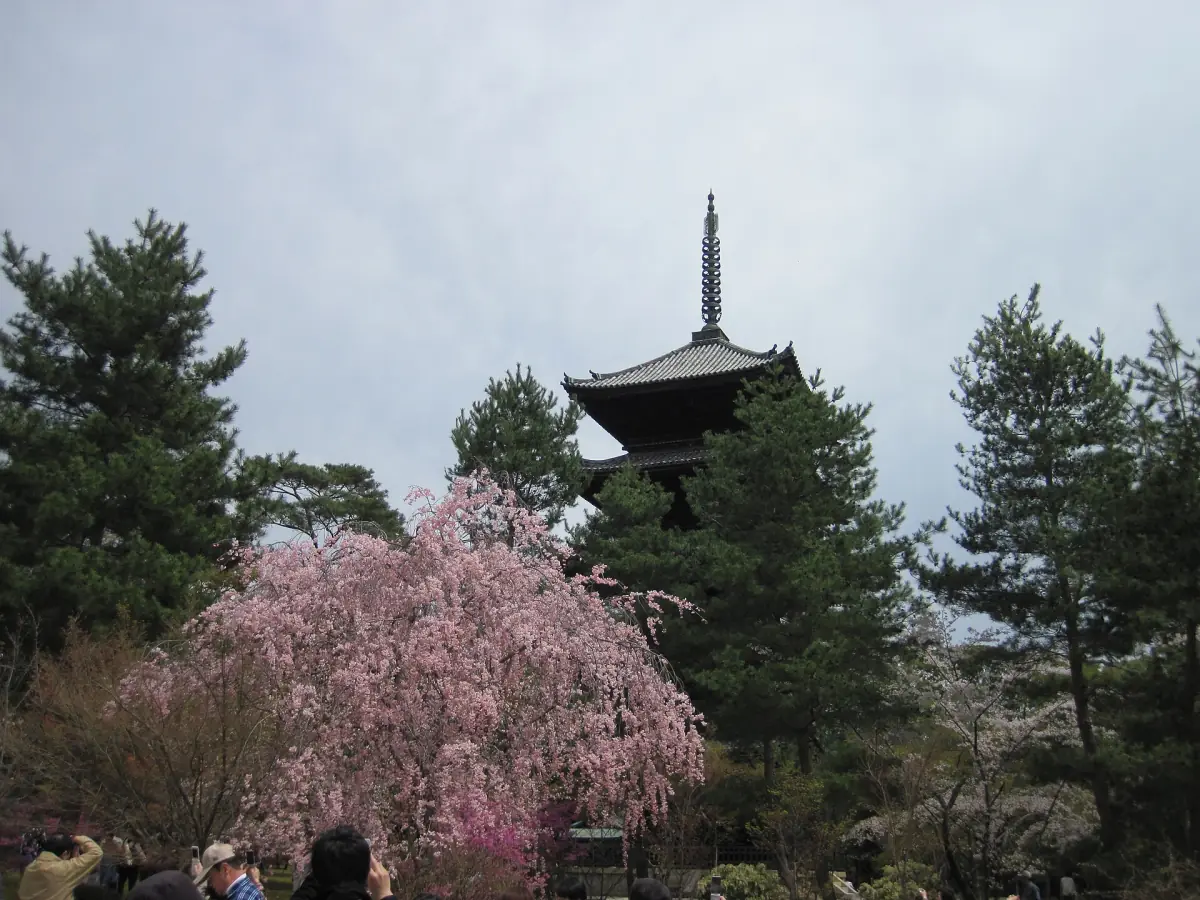
The five-storey pagoda is the landmark of Ninna-ji. You see it from the main grounds and from the garden, where it rises above the pines and, in spring, above the cherries. The view from the garden is a view, not a way inside: a garden ticket does not include the interior, so plan to admire the pagoda from the outside.
If you are walking the Kinukake-no-michi from east to west, Ninna-ji is your last stop, so you may reach it in the afternoon. That works well too, but leave enough time before the ticket desk closes.
Opening hours and practical details
Times for 2026. Special events and the cherry season can change them.
March to November
9:00 to 17:00. The ticket desk closes 30 minutes earlier, so arrive by 16:30 at the latest if you want to see the garden.
December to February
9:00 to 16:30, with the ticket desk closing 30 minutes earlier. Winter afternoons are short, so put Ninna-ji earlier in your day.
Cherry season
Opening from 8:00 or 8:30 and a separate cherry fee. Check the current times before you set off.
Parking
Since October 11, 2025, the coin car park has been open around the clock. The temple and garden hours still apply, so a parked car does not mean the gates are open.
From Kinkaku-ji to Ninna-ji on the Kinukake-no-michi
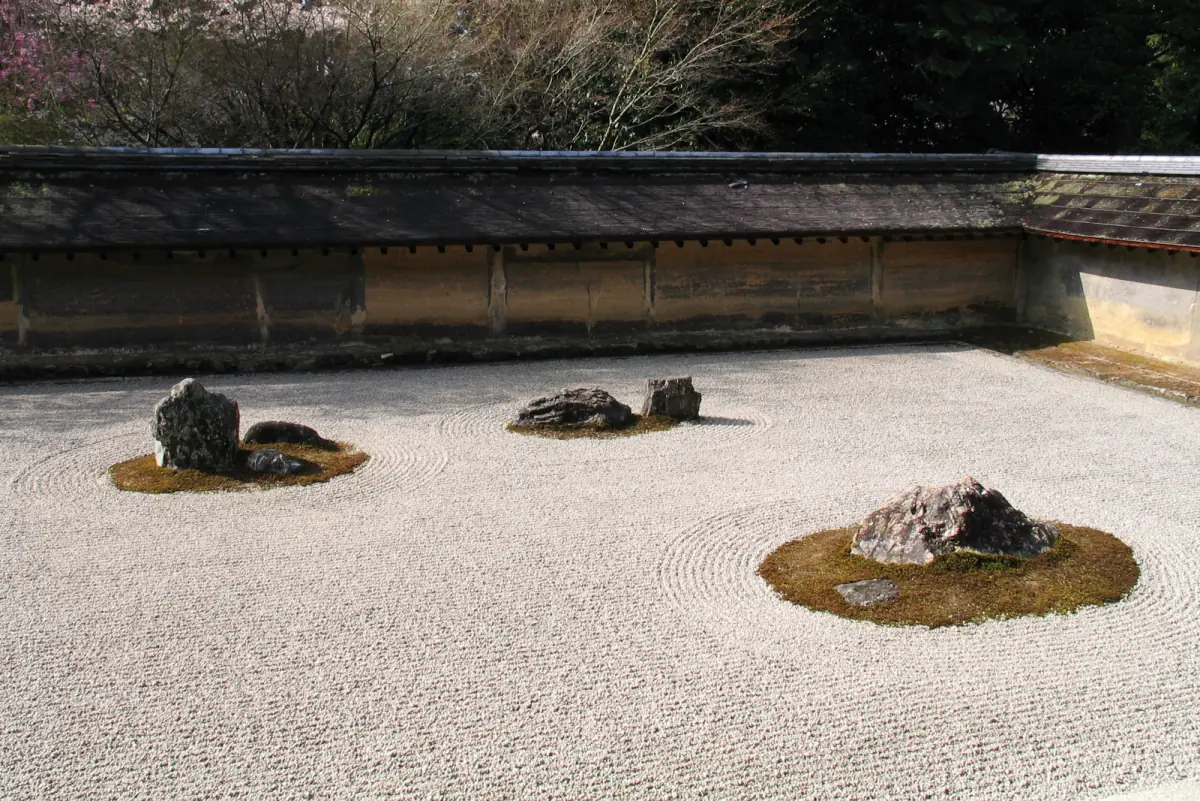
The Kinukake-no-michi runs for about 2.5 km from Kinkaku-ji past Ryoan-ji to Ninna-ji. The walk from Kinkaku-ji to Ryoan-ji takes about 18 minutes and from Ryoan-ji to Ninna-ji about 11 minutes. That is pure walking time: add your visits, breaks and the paths inside each temple. Read more about the rock garden on the way on our Ryoan-ji page.
From Ninna-ji you can continue to Arashiyama on the Randen tram from Omuro-Ninnaji station. Every ride on the Randen network costs ¥250 for adults and ¥120 for children aged 6 to under 12. Arashiyama itself, with the bamboo grove and the river, is covered in detail on our Arashiyama guide.
On November 21 to 23 and 28 to 29, 2026, the seasonal city bus 109 links Kitaoji, Daitokuji-mae, Kinkakuji-michi, Ryoanji-mae, Omuro Ninnaji and Arashiyama, with nine departures a day from each end, roughly hourly between 8:00 and 16:00. On other days it does not run, so plan with the regular buses, the Randen or your own feet.
A half day in northwest Kyoto
One way to combine the three temples on the Kinukake-no-michi without rushing.
9:00 Kinkaku-ji
Start at the Golden Pavilion when it opens at 9:00. Fees and payment are explained on the entry fee page.
Late morning: Ryoan-ji
Walk about 18 minutes along the Kinukake-no-michi to the rock garden of Ryoan-ji.
Midday: Ninna-ji
Another 11 minutes on foot. Visit the Goten garden and see the pagoda from the grounds.
Afternoon: on to Arashiyama
Take the Randen from Omuro-Ninnaji, or head back towards the city. More ideas on our page about things to do near Kinkakuji.
Ninna-ji: frequently asked questions
How much does Ninna-ji cost?
Outside the cherry season the main grounds are free. As of 2026, the Goten garden costs ¥800 for adults, the seasonal treasure house ¥500 and the cherry viewing ¥800. Pupils up to and including high school enter the garden and cherry grove free.
When do the Omuro cherries bloom?
They are late bloomers, and the cherry grove opens to the public around mid-April. The exact dates depend on the weather each year, so follow the temple's flowering updates shortly before your trip.
Can you go inside the pagoda?
Plan to see it from the outside. You view the five-storey pagoda from the grounds and the garden; a regular ticket does not cover the interior.
How far is Ninna-ji from Kinkaku-ji?
The Kinukake-no-michi from Kinkaku-ji via Ryoan-ji to Ninna-ji is about 2.5 km. Walking takes about 18 minutes to Ryoan-ji and another 11 minutes to Ninna-ji, without time for visits.
Is there parking at Ninna-ji?
Yes. Since October 11, 2025, a coin car park has been open around the clock. The temple and garden keep their own opening hours.