
Best time to visit Kinkakuji at a glance
Kinkaku-ji is open daily from 09:00 to 17:00, all year, with no regular closing day. That makes the best time to visit Kinkakuji a question of what you want to see. Snow on the gold roof is most likely in January and February. Autumn colour usually peaks from mid to late November. Spring and autumn are milder.
Whatever the season, the time of day matters as much as the month. If you want company at opening time or prefer not to deal with the buses, Kinkaku-ji tours include early morning walks and day tours that start at Kyoto Station.
Kyoto weather by month
Averages for the Kyoto weather station, 1991 to 2020. They describe the city, not the temple garden, and say nothing about a single day.
| Month | Avg high | Avg low | Rain | Days with snow |
|---|---|---|---|---|
| January | 9.1 °C | 1.5 °C | 53.3 mm | 16.3 |
| February | 10.0 °C | 1.6 °C | 65.1 mm | 14.2 |
| March | 14.1 °C | 4.3 °C | 106.2 mm | 6.8 |
| April | 20.1 °C | 9.2 °C | 117.0 mm | 0.4 |
| May | 25.1 °C | 14.5 °C | 151.4 mm | – |
| June | 28.1 °C | 19.2 °C | 199.7 mm | – |
| July | 32.0 °C | 23.6 °C | 223.6 mm | – |
| August | 33.7 °C | 24.7 °C | 153.8 mm | – |
| September | 29.2 °C | 20.7 °C | 178.5 mm | – |
| October | 23.4 °C | 14.4 °C | 143.2 mm | – |
| November | 17.3 °C | 8.4 °C | 73.9 mm | – |
| December | 11.6 °C | 3.5 °C | 57.3 mm | 6.9 |
For most visitors, November and the first half of spring are a good compromise: comfortable temperatures, less rain than in early summer and plenty to see in the temples nearby. Photographers chasing snow should plan a flexible day in January or February.
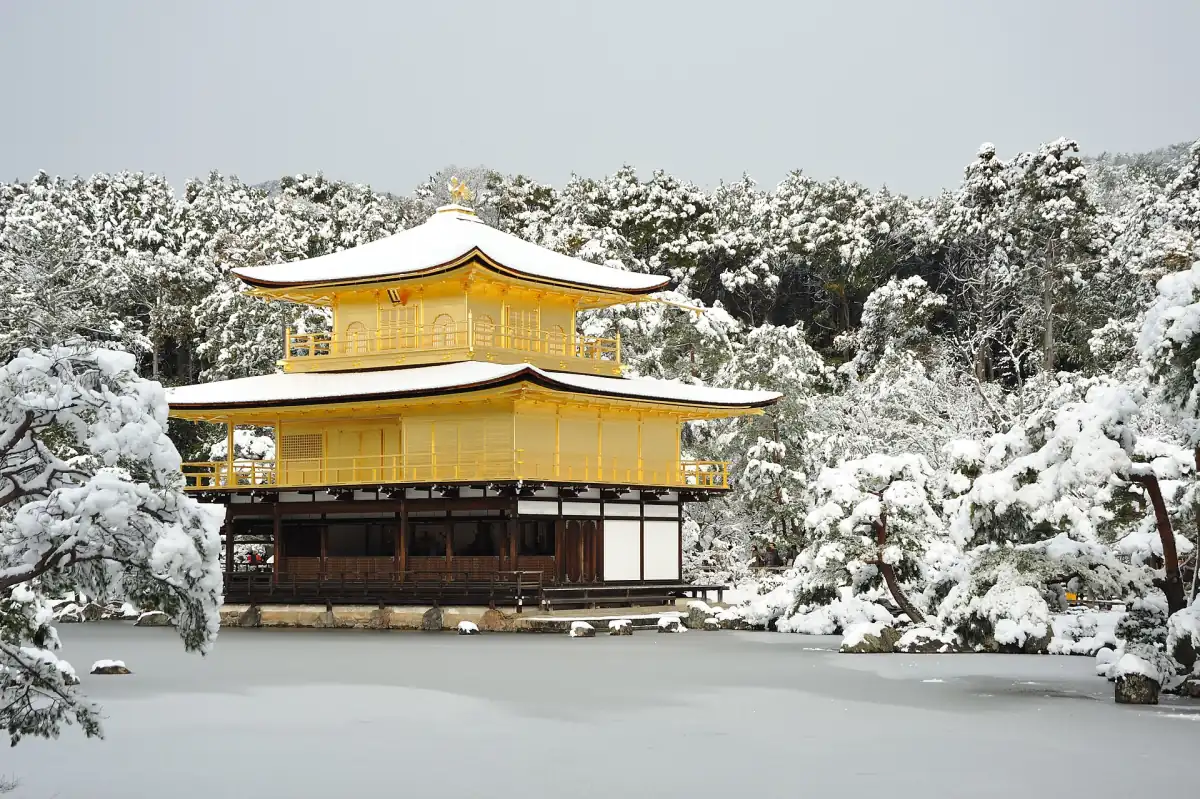
Kinkakuji in winter: snow on the Golden Pavilion
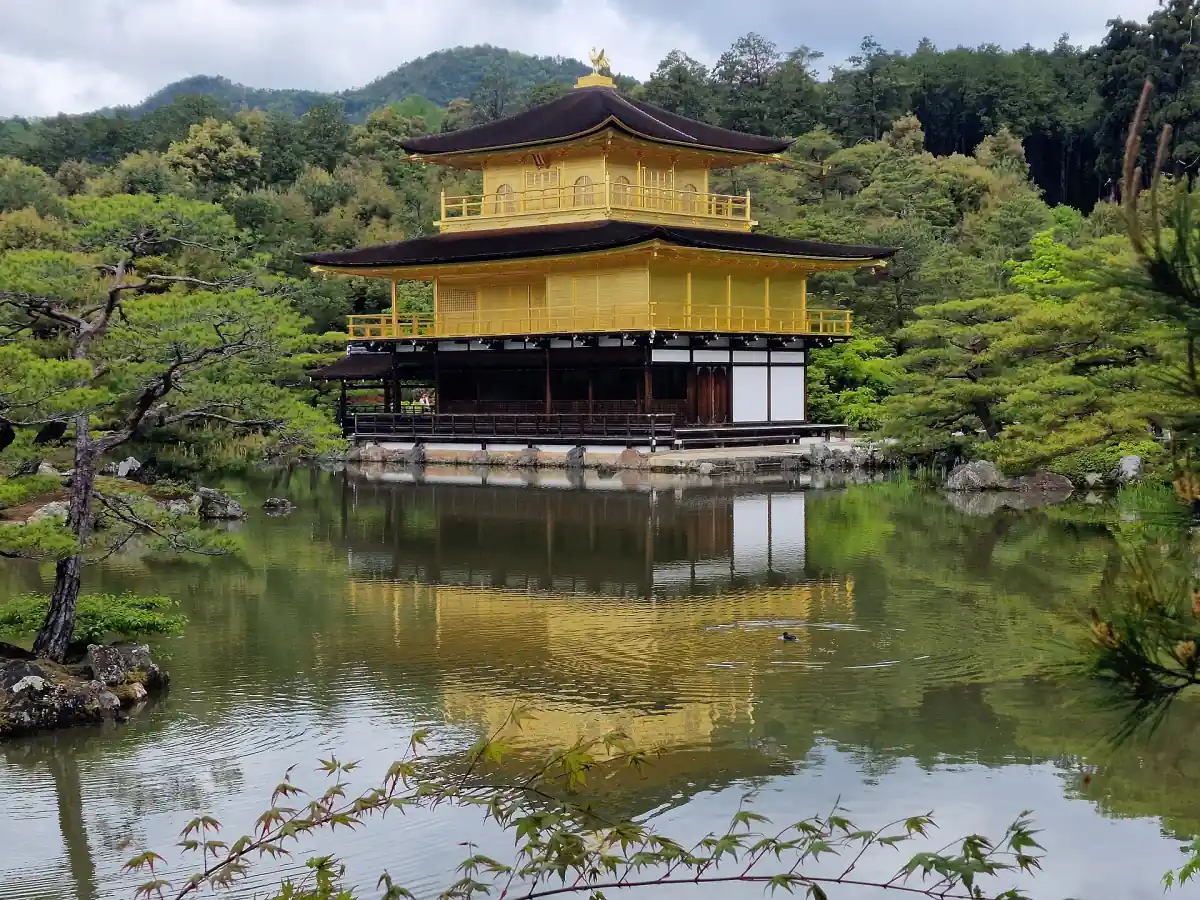
A well-known picture is the pavilion with white roofs above a dark pond. In Kyoto, snow is observed on 16.3 days in January and 14.2 days in February on average, with fewer in December (6.9) and March (6.8). That counts days when snow falls, not days with a lasting snow cover. The average deepest snow of the year is only 7 cm, so a white garden is never certain.
If you are in Kyoto in winter, watch the forecast and keep a morning free. The temple runs a live camera that refreshes about every three minutes, a quick way to see whether there is snow before you set off. Dress warmly: average lows in January and February sit around 1.5 °C.
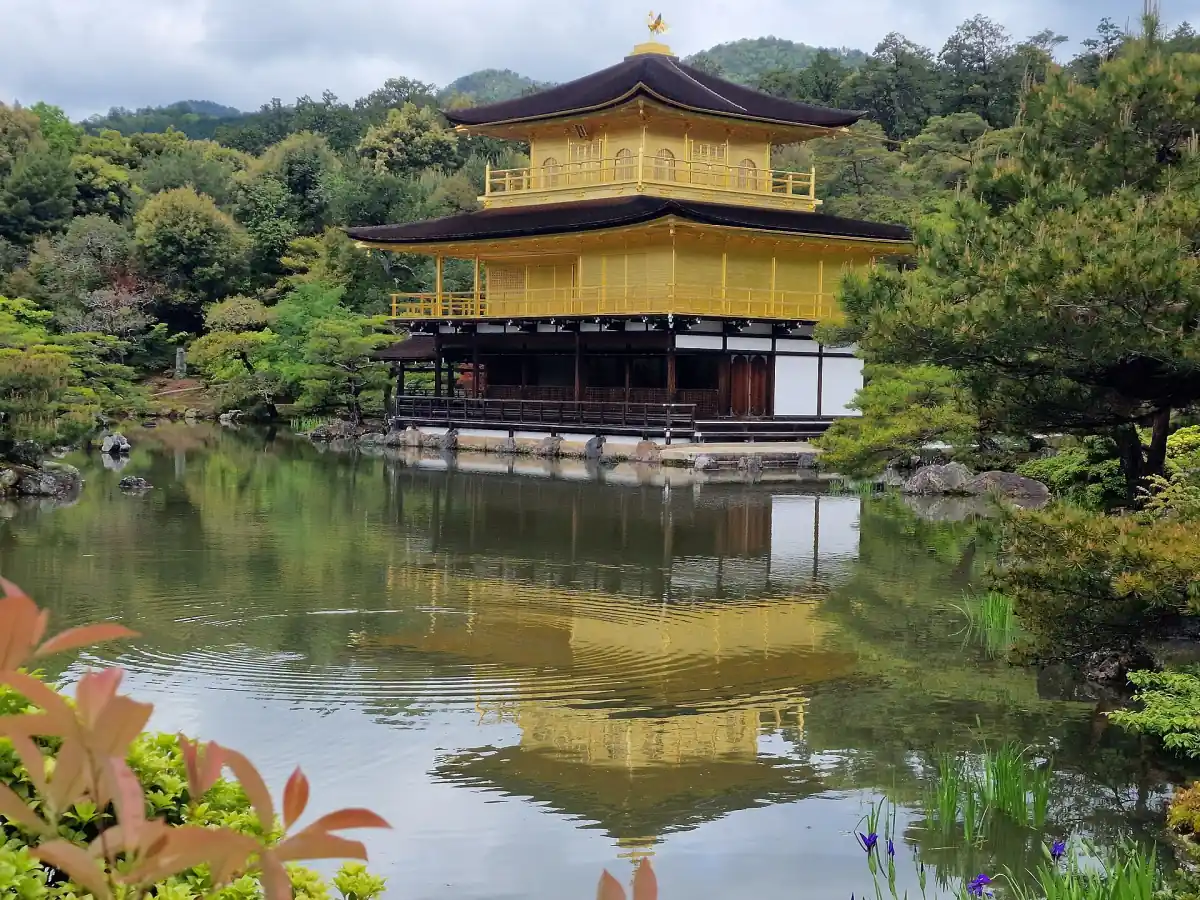
Our pick: an early-morning tour away from the crowds
The tour starts early, which helps if you want a calmer visit even in busy seasons.
Hand-picked tours, booked through GetYourGuide. Prices are indicative starting prices in US dollars (as of October 2026). Tap a tour for live availability and the current price in your currency.
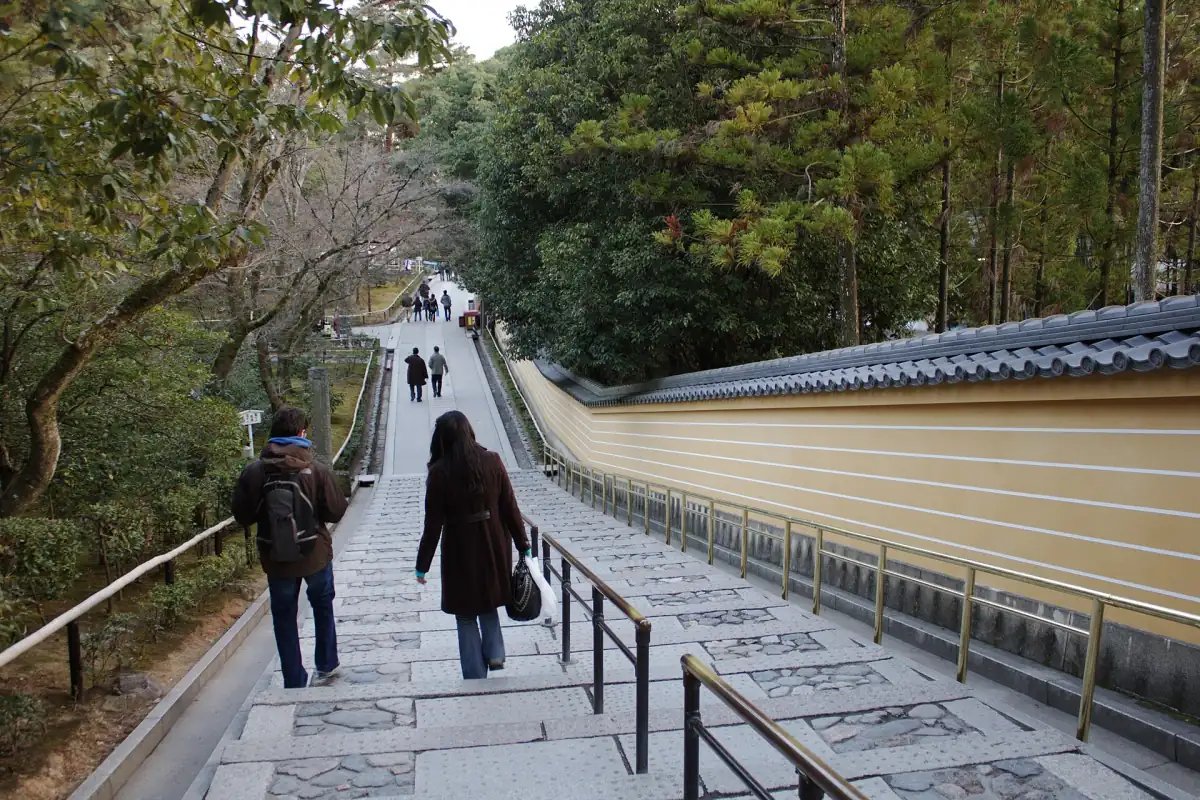
Kinkaku-ji tours in every season
Early morning walks, guided visits with entry and day tours that include the Golden Pavilion, with live prices and availability.
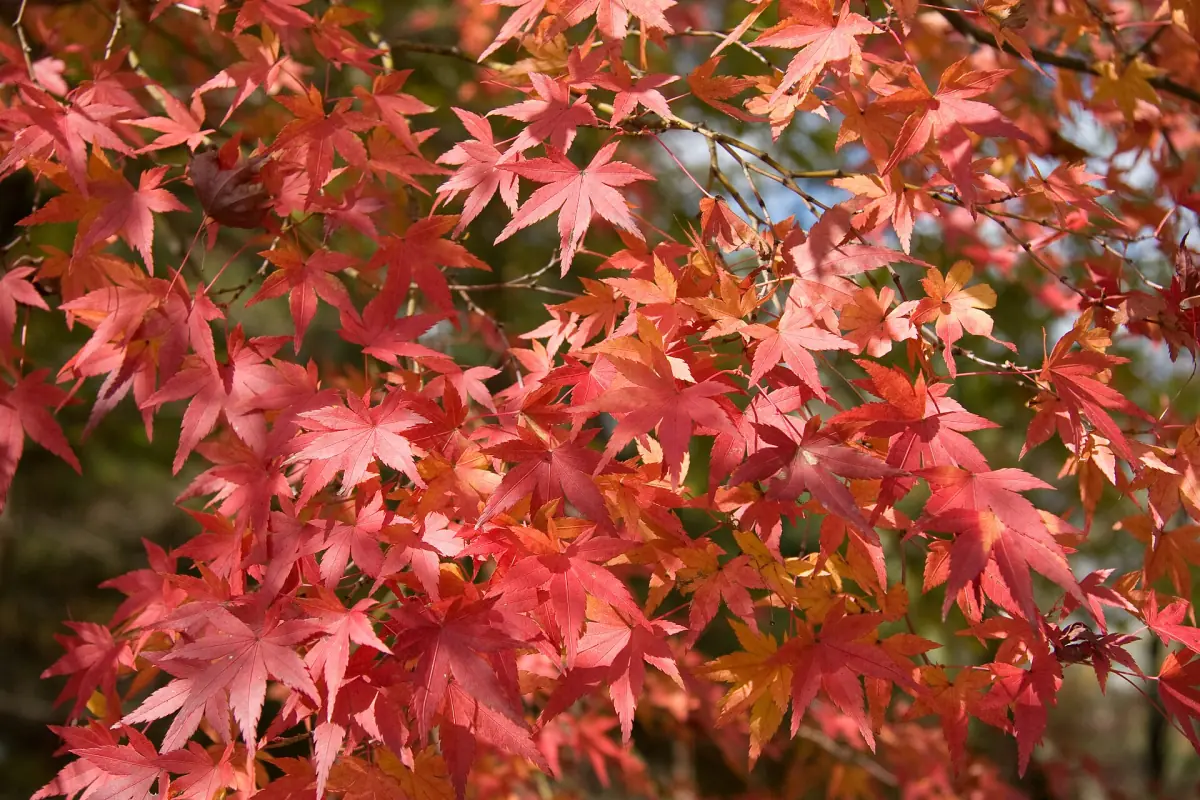
Kinkakuji in autumn: when the leaves turn
Autumn colour around Kinkaku-ji usually comes from mid to late November. Exactly when depends on the year, so check current colour reports a few days ahead. November is also pleasant for walking, with average highs of 17.3 °C and much less rain than in September or October.
For autumn 2026, the city plans extra services and traffic management from 31 October to 29 November. On 21 to 23 and 28 to 29 November a seasonal bus 109 is planned between Kitaoji, Kinkakuji-michi, Ryoanji-mae, Omuro Ninnaji and Arashiyama, with nine trips a day from each end between about 08:00 and 16:00.
Nearby, the maple garden at Kitano Tenmangu opens from 31 October to 6 December 2026, with evening lighting until 20:00 from 13 November. On weekends from 26 September to 29 November 2026, Ryoan-ji runs a special evening viewing from 16:00 to 18:30 for small groups with advance booking.
Spring: cherry and plum blossom nearby
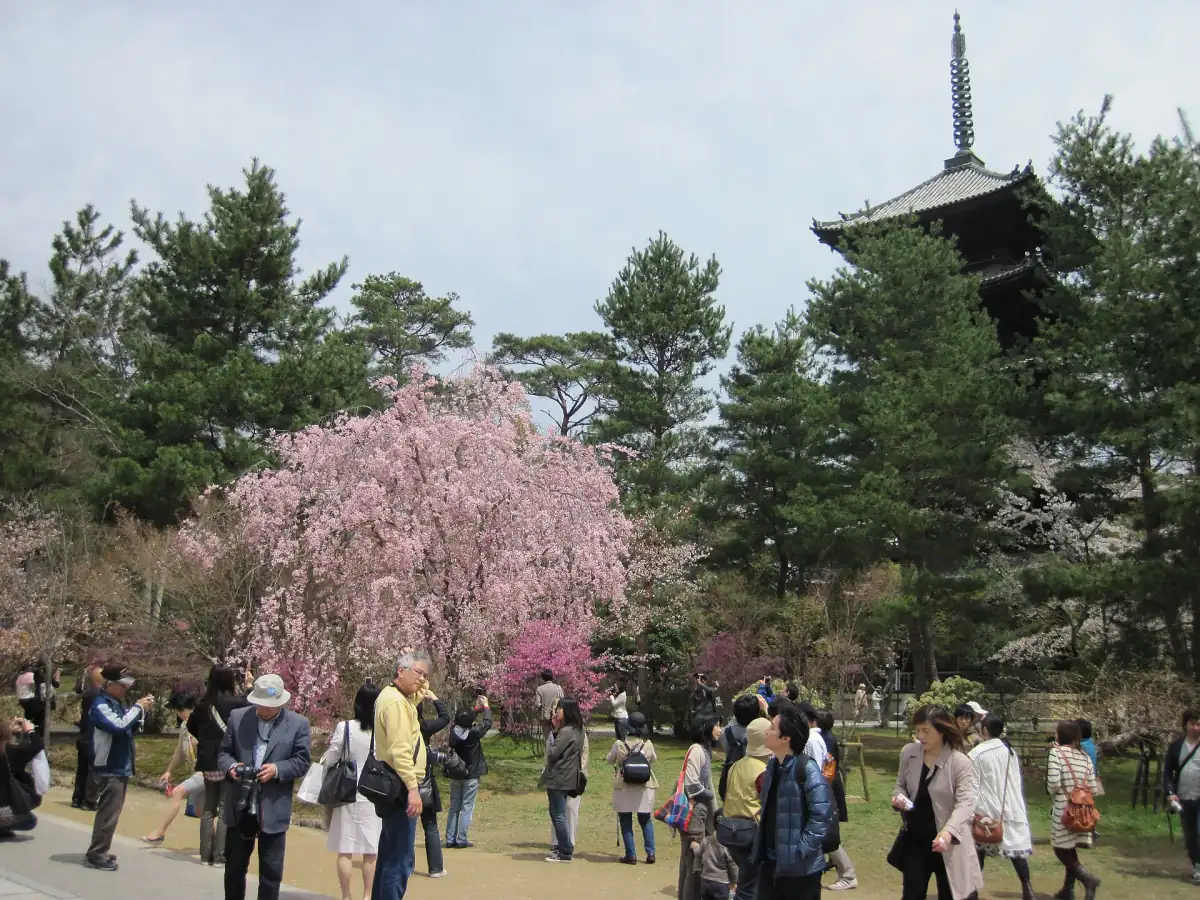
For blossom in spring, look at the places close by. The plum garden at Kitano Tenmangu usually opens from early February to the end of March. Hirano Shrine is linked with the early-flowering Sakigake cherry. The late-blooming Omuro cherries at Ninna-ji usually draw visitors around mid-April, though the date shifts with the weather each year.
April brings average highs of 20.1 °C and lows of 9.2 °C, good walking weather for the Kinukake-no-michi between Kinkaku-ji, Ryoan-ji and Ninna-ji. See our Ninna-ji page for cherry season fees.
Summer and the rainy season
June and July are the wettest months, with 199.7 mm and 223.6 mm of rain on average. July and August are hot: average highs of 32.0 °C and 33.7 °C, with average lows above 23 °C. The pond and the green pines still look good. Bring water and a hat, and plan the garden for the morning, when it is cooler.
Crowds: hour and bus matter
Crowds depend on the hour and on the bus more than on the month. The city itself warns that the direct bus 205 from Kyoto Station can be slow and packed. Taking the Karasuma subway line to Kitaoji and changing to bus 204 or 205 is the alternative. The garden can be busy at any hour, and opening time is no promise of an empty garden, especially in November and in spring.
Our getting there page compares the bus, subway and taxi options.
Can you visit Kinkaku-ji at night?
No regular evening opening is offered in 2026: Kinkaku-ji keeps its usual hours of 09:00 to 17:00. For an evening temple visit in autumn, the lighting at the Kitano Tenmangu maple garden or the booked evening viewing at Ryoan-ji are the nearby options. For more on Kyoto's seasons and festivals, see our guide to the best time to visit Kyoto.
FAQ
When is snow most likely at Kinkaku-ji?
January and February, with snow observed on about 16 and 14 days on average. The average deepest snow of the year is 7 cm, so keep a flexible morning and check the forecast.
When do the autumn leaves peak at Kinkaku-ji?
Usually from mid to late November. The exact timing varies from year to year, so check colour reports shortly before your visit.
Is Kinkaku-ji open every day?
Yes. The regular hours are 09:00 to 17:00 every day of the year, with no regular closing day. Special events can change hours, so check before you go.
How can I avoid the crowds at Kinkaku-ji?
Crowds depend on the hour and on the bus. There is no guarantee of an empty garden at opening, especially in November and spring. The Karasuma subway line plus bus 204 or 205 avoids the packed direct bus.
Is there an evening illumination at Kinkaku-ji?
No regular evening opening is offered in 2026. Nearby, the Kitano Tenmangu maple garden is lit until 20:00 from 13 November to 6 December 2026.