
The Kinkakuji garden at a glance
The garden of Rokuon-ji, the temple better known as Kinkaku-ji, is designated in Japan as both a Special Historic Site and a Special Place of Scenic Beauty. At its centre lies the Kyoko-chi, the Mirror Pond, with Ashihara-jima and other islands and a series of named stones. The Golden Pavilion stands on its shore, and the view across the water is the one most visitors come for.
A visit follows a set path along the pond and past the pavilion, with stairs beyond it. A model route by the city plans about 40 minutes for the whole visit to Kinkaku-ji. That is a planning value for the visit, not the walking time of the path alone.
If you would like someone to explain the stones, islands and buildings as you walk, small-group Kinkaku-ji guided tours with entry cover the garden in 1.5 to 3 hours.
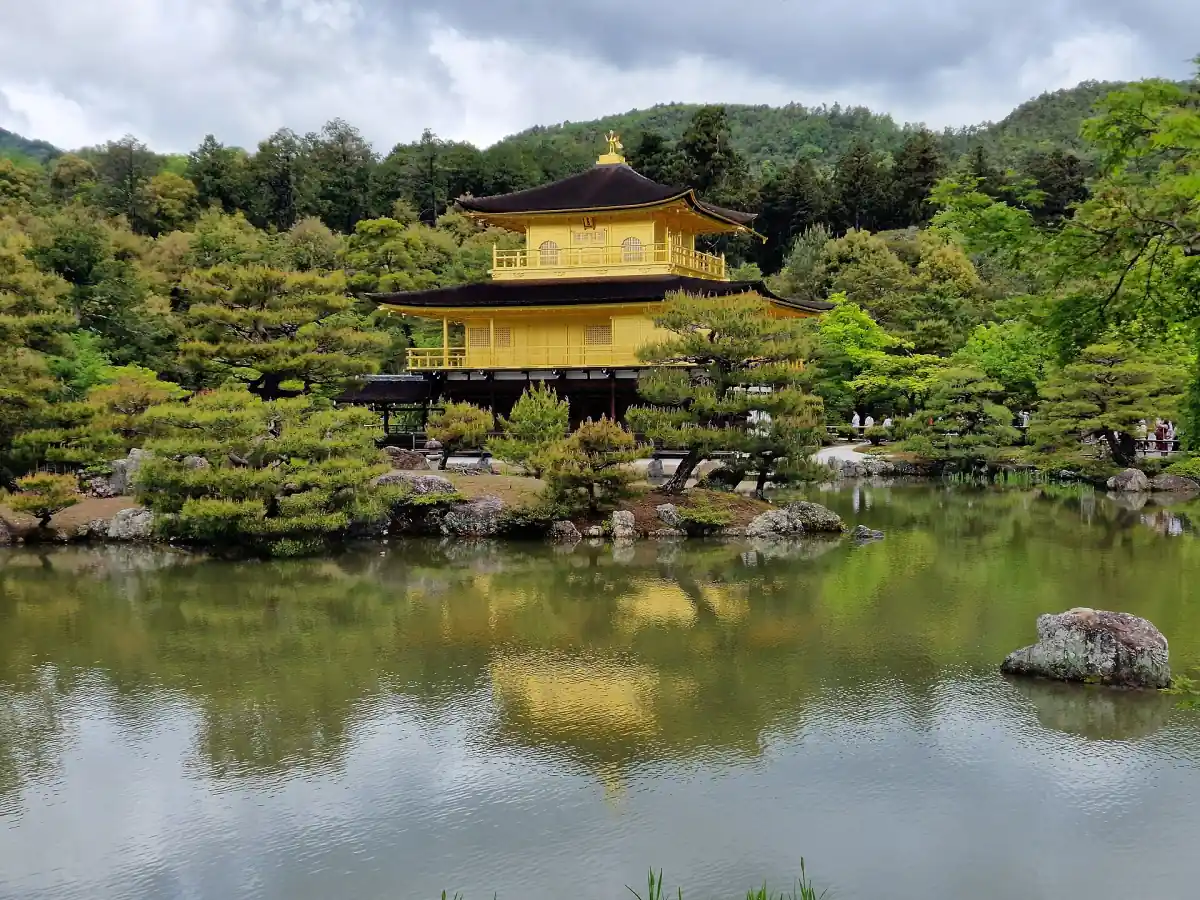
Kyoko-chi, the Mirror Pond
The pond covers about 6,600 m² and takes up much of the lower garden. The largest island, Ashihara-jima, is joined by smaller islands and by stones that each carry a name. On calm days the pavilion is reflected in the water, which gives the pond its name.
From the path along the pond the view opens across the water to the pavilion. Take your time for photos there. For the building, its three floors and the phoenix on the roof, see our page on the Golden Pavilion.
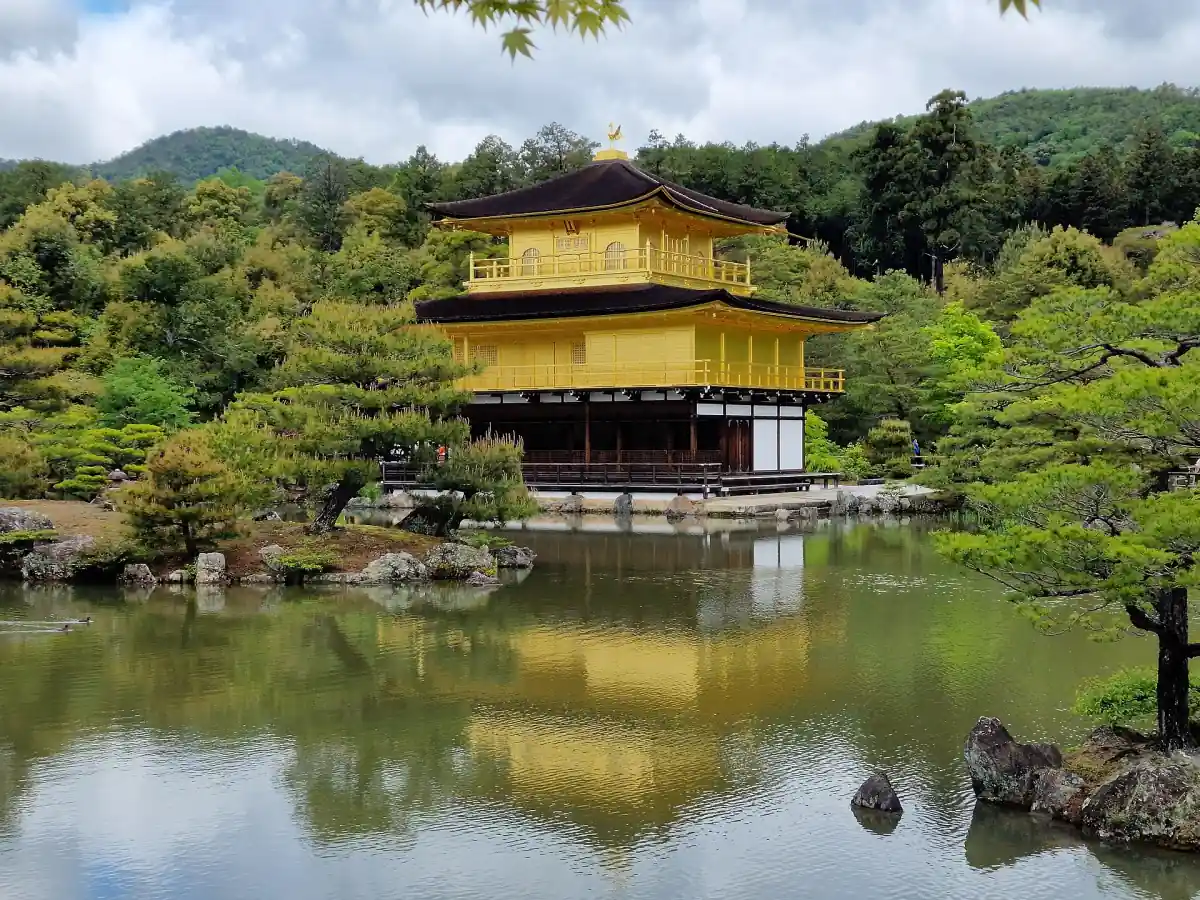
Our pick: a small-group walk through the garden
You walk the garden of Kinkaku-ji with a guide in a small group, and the admission is already covered.
Hand-picked tours, booked through GetYourGuide. Prices are indicative starting prices in US dollars (as of October 2026). Tap a tour for live availability and the current price in your currency.
Guided tours of Kinkakuji and its garden
Small-group walks with entry, a garden tour that adds Ninna-ji, and day tours from Kyoto, with live prices and availability.
Along the walking route
Named places in the garden.
Rikushu-no-matsu
A pine whose name means "land boat pine". It is one of the named stations of the garden.
Gingasen
One of the named stations of the garden.
Ryumon waterfall and the carp stone
The Ryumon waterfall drops 2.3 m. Part of it is Rigyoseki, the carp stone. It stands for the Dragon Gate, where in the old legend a carp turns into a dragon.
Anmintaku
Another named station of the garden, together with the waterfall and Gingasen.
Sekka-tei
A teahouse in the sukiya style. Its name refers to the view of the pavilion in the evening light.
Fudo-do
A small hall with a stone figure of Fudo Myoo, attributed to Kukai. It is opened for rites on 3 February and 16 August and is otherwise not open for visits.
Walking the Kinkakuji temple garden: practical tips
Steps and wheelchair access
The path is largely step-free from the entrance to the side of the pavilion. After that come stairs. Wheelchair users and parents with prams can go as far as the pavilion and then return to the entrance the same way. Wheelchairs can be borrowed when available, without a reservation, and there is an accessible toilet.
Photos and drones
Small cameras for private snapshots are allowed. Under the temple's rules, publishing photos, including on social media, commercial shoots, group photos, video streams and drones are not permitted.
Pets, bags and food
Assistance dogs are welcome. Small dogs and cats must stay completely inside a cage or carrier the whole time, and you may not take them out for photos. Leave large luggage at your hotel, and plan meals before or after your visit, as the garden has no place for eating.
Matcha in the garden
Within the grounds, the temple sells matcha with a Japanese sweet. In January 2026 it cost ¥500. Check the price on the day.
Paying the entry
Since 28 September 2026 you can pay the entry at the visitor entrance with Omairi Pay, which takes Visa, Mastercard, JCB, American Express and Diners Club. Goshuin and amulets are not part of this. More on prices and times on our Kinkaku-ji entry fee page.
The garden through the seasons
In autumn the leaves around Kinkaku-ji usually turn from mid to late November. The colour on a given day cannot be planned to the week.
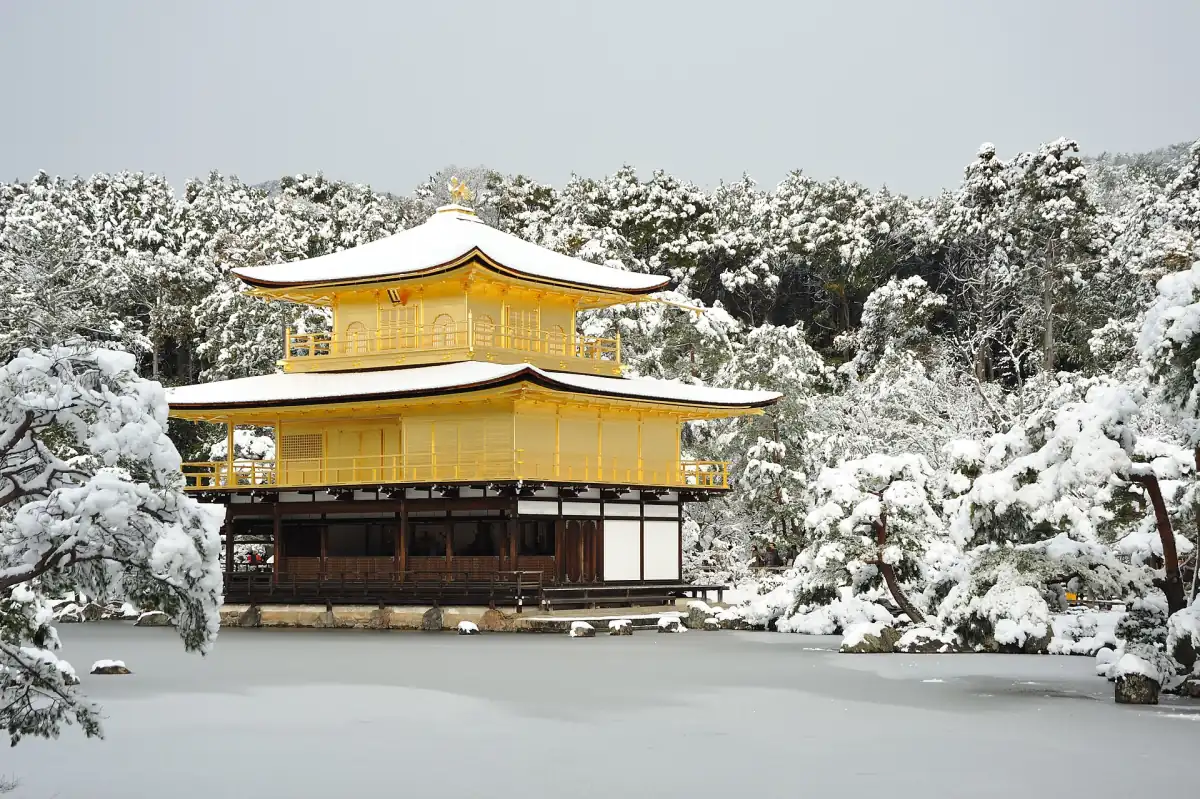
Snow in Kyoto is most likely in January and February. The long-term average of the weather station in Kyoto counts 16.3 days with snowfall in January and 14.2 in February, but that means snow was seen, not that the garden lies under a white cover. A snowy pavilion is a matter of luck.
The temple runs a live camera that refreshes about every 3 minutes, so you can check the weather and the crowds before you set off. More in our guide to the best time to visit Kinkakuji. If you want to compare Kinkaku-ji with other Kyoto temple gardens, our sister site has an overview of temples in Kyoto.
On your own or with a guide?
The garden is easy to walk alone. A guide adds context.
| On your own | Small-group guided walk | Garden tour with Ninna-ji | |
|---|---|---|---|
| Time at Kinkaku-ji | About 40 minutes | 1.5 to 3.5 hours in total | 2.5 to 3 hours in total |
| Entry | ¥500, paid at the gate | Included | Kinkaku-ji and Ninna-ji included |
| Explanations | – | Guide | English-speaking guide |
| Transport | – | – | Taxi from Kinkaku-ji to Ninna-ji |
For most visitors the garden works well on your own in about 40 minutes. If you want the names and stories of the stones, islands and buildings explained on the spot, book a small-group guided walk with entry. The history of Kinkaku-ji is a good read either way.

Kinkakuji garden: common questions
How long does it take to walk the Kinkakuji garden?
A model route by the city plans about 40 minutes for the whole visit. That includes the walk around the pond and past the pavilion. Allow more time if you stop for matcha or many photos.
How big is the Mirror Pond?
The Kyoko-chi covers about 6,600 m². It holds Ashihara-jima and other islands as well as a number of named stones.
Is the garden wheelchair accessible?
Up to the side of the pavilion the path is largely step-free. After that there are stairs, so wheelchair users return to the entrance the same way. Wheelchairs can be borrowed when available.
Is there a teahouse in the garden?
Sekka-tei is a teahouse in the sukiya style and one of the named places of the garden. Matcha with a Japanese sweet is sold within the grounds, at ¥500 as of January 2026.
Can I post my photos of the garden on social media?
Under the temple's rules, private snapshots with small cameras are allowed, but publishing photos, including on social media, is not. Drones are not permitted.