
The Golden Pavilion at a glance
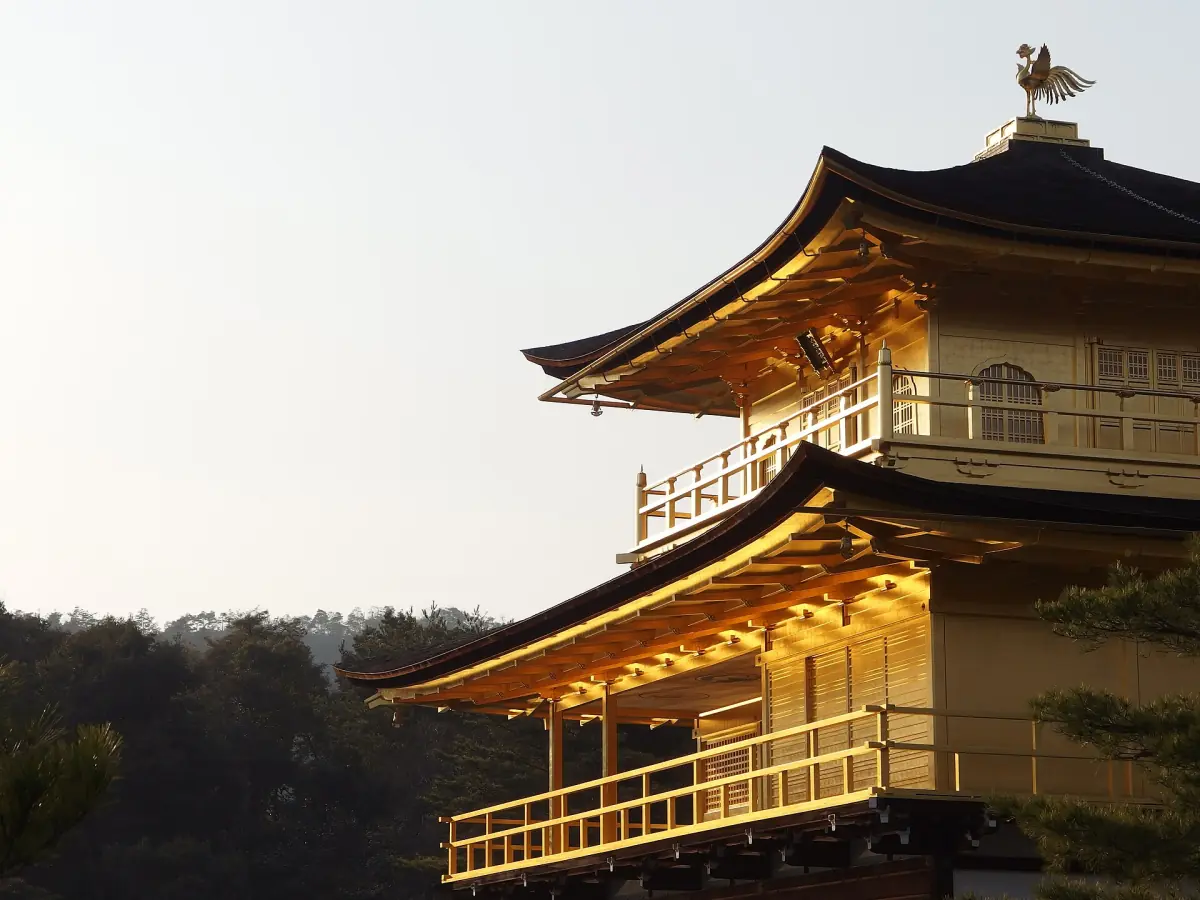
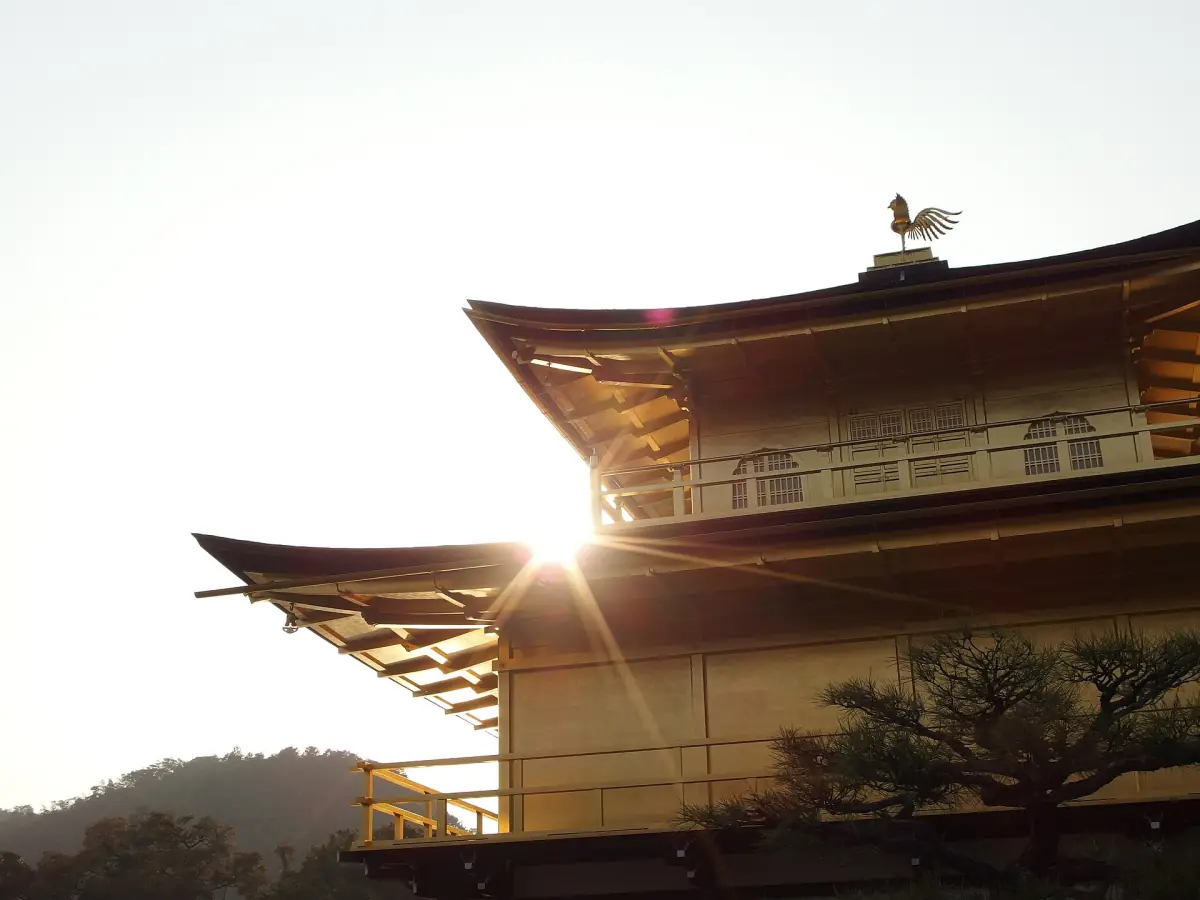
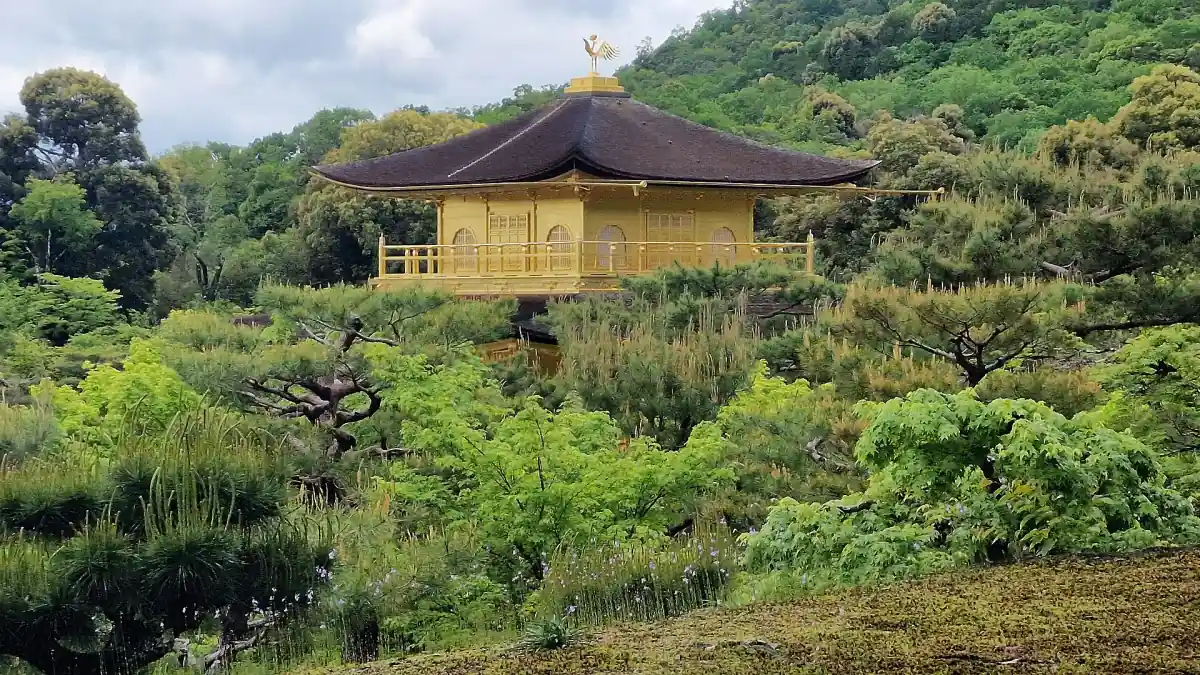
The building that gives Kinkaku-ji its name is a three-storey reliquary pavilion, or shariden, on the shore of the Kyoko-chi pond. Each floor follows a different building style. The upper two floors are covered in gold leaf laid on lacquer, and a phoenix stands on the roof.
The pavilion you see today is not the medieval original. It burned down completely in 1950 and was rebuilt in 1955. In autumn 1987 the lacquer and gold leaf were renewed. The temple, Rokuon-ji, belongs to the Shokoku-ji branch of Rinzai Zen.
A visit is a walk through the garden with views of the pavilion from outside. If you want the floors, the styles and the symbols explained on the spot, guided Golden Pavilion tours with entry take 1.5 to 3.5 hours.
Three floors, three styles
The pavilion combines the architecture of the court, the samurai houses and Zen temples in one building.
| Floor | Name | Style | Gold leaf |
|---|---|---|---|
| First floor | Hosui-in | Shinden-zukuri, the style of aristocratic residences | No |
| Second floor | Choon-do | Buke-zukuri, the style of samurai houses | Yes, on lacquer |
| Third floor | Kukkyocho | Chinese-influenced Zen temple style | Yes, on lacquer |
| Roof | – | Thin shingles of sawara cypress | Phoenix on top |
For most visitors the best way to compare the three floors is from the path across the pond.
Our pick: a guided tour that explains the pavilion
A 90-minute walk that explains how the Golden Pavilion is built and what to look for, with the ticket included.
Hand-picked tours, booked through GetYourGuide. Prices are indicative starting prices in US dollars (as of October 2026). Tap a tour for live availability and the current price in your currency.
Golden Pavilion guided tours
Small-group walks with entry, a garden tour that adds Ninna-ji, and day tours from Kyoto, with live prices and availability.
Kinkakuji temple: what you can and cannot see
Plan your visit as a view from outside. The regular route leads along the pond and past the pavilion, and neither the entry ticket nor a standard guided tour promises access to the rooms inside. A guided tour explains the building but does not change the temple's rules.
What the floors held
Yoshimitsu's pavilion is described with a Shaka triad on the first floor, a Kannon hall on the second and relics of the Buddha on the top floor. That is the building as Yoshimitsu had it made; do not expect to see each of these today. In the 1987 restoration, the ceiling paintings and the figure of Yoshimitsu were renewed along with the lacquer and the gold leaf.
Special access on tours
One small-group tour offers a monk-guided option that it describes as access to a "Golden Hall" and a "Sutra Hall". This is an option of a single tour, not a usual part of a visit. If it matters to you, ask the tour which building is meant before you book.
The phoenix and the roof
A phoenix crowns the roof. The roof itself is covered with thin shingles of sawara, a Japanese cypress. From the pond you see the bird against the sky above the top floor.
The gold leaf on the upper floors is laid on a base of lacquer. On calm days the whole pavilion is reflected in the water of the Kyoko-chi. More on the pond and the route in our guide to the Kinkakuji garden.
Gold leaf, fire and restoration
Ashikaga Yoshimitsu began his Kitayama villa in 1397. After his death in 1408 it became a Zen temple, as he had wished. A dismantling repair of the pavilion was completed in 1904, in the Meiji era.
On 2 July 1950 a trainee monk of the temple set fire to the pavilion, and it burned down completely. It was rebuilt over 3 years from the records of the Meiji-era dismantling repair and rededicated on 10 October 1955. Yukio Mishima's novel "Kinkaku-ji" appeared in 1956. The full story is on our page on the history of Kinkaku-ji, and our sister site has more on the history of Kyoto.
In autumn 1987 the lacquer, the gold leaf, the ceiling paintings and the figure of Yoshimitsu were renewed.
Tips for seeing the pavilion
- Time: a model route by the city allows about 40 minutes for the whole visit. Kinkaku-ji is open daily from 9:00 to 17:00 (2026).
- Entry: ¥500 for adults and high school students, ¥300 for elementary and junior high school students (2026). Card payment through Omairi Pay has been possible at the visitor entrance since 28 September 2026.
- Photos: private snapshots with small cameras are fine. The temple does not permit publishing photos, including on social media, or drones.
- Gold and silver: if you also plan to see the Silver Pavilion, read Kinkakuji and Ginkakuji compared first. The two buildings are very different.
The Golden Pavilion: common questions
Can you go inside the Golden Pavilion?
Plan to see it from outside. The regular route leads along the pond and past the building, and neither the entry ticket nor a standard guided tour promises access to the interior.
Is the Golden Pavilion covered in real gold?
The upper two floors are covered in gold leaf laid on lacquer. The first floor is not gilded. Lacquer and gold leaf were renewed in autumn 1987.
What is on the roof of Kinkaku-ji?
A phoenix. The roof is covered with thin shingles of sawara cypress.
Is the pavilion original?
No. The original burned down on 2 July 1950 after a trainee monk set it on fire. The current pavilion was rebuilt and rededicated in 1955.
What was kept inside the pavilion?
Yoshimitsu's building held a Shaka triad on the first floor, a Kannon hall on the second and relics of the Buddha on the third.